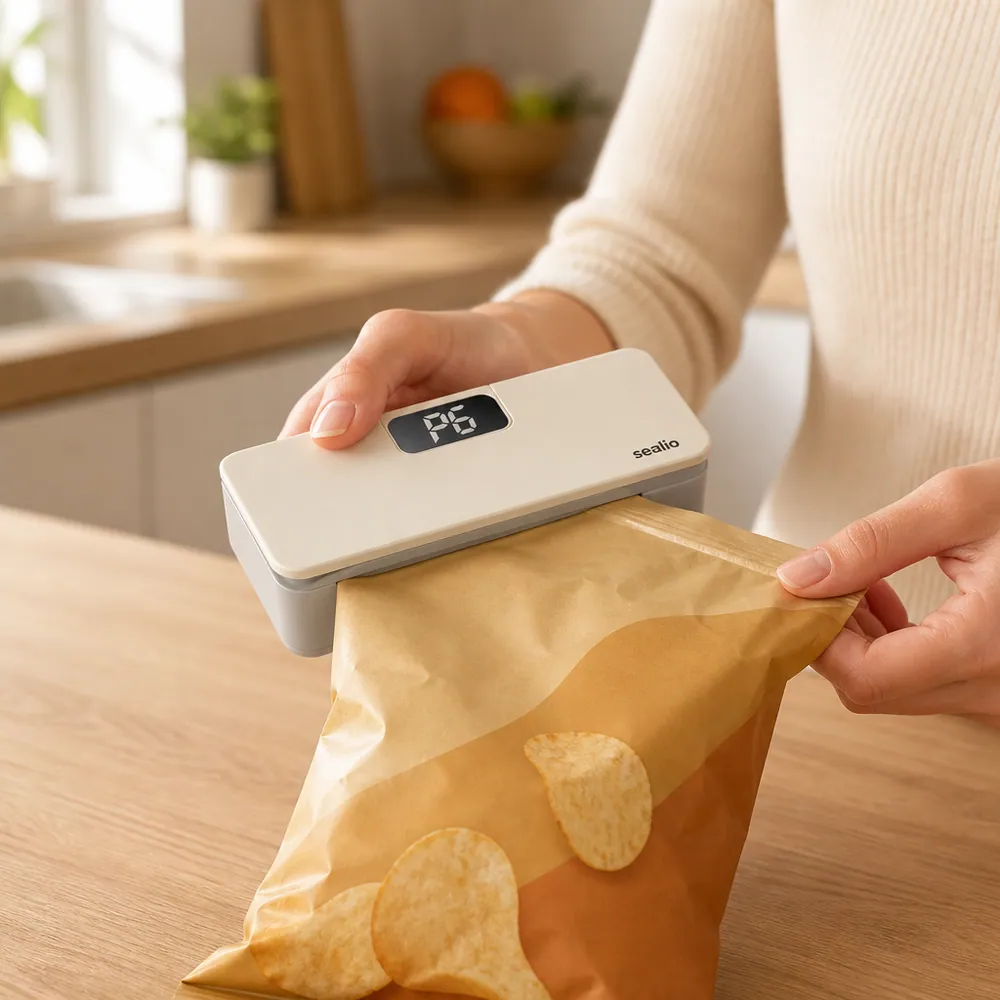
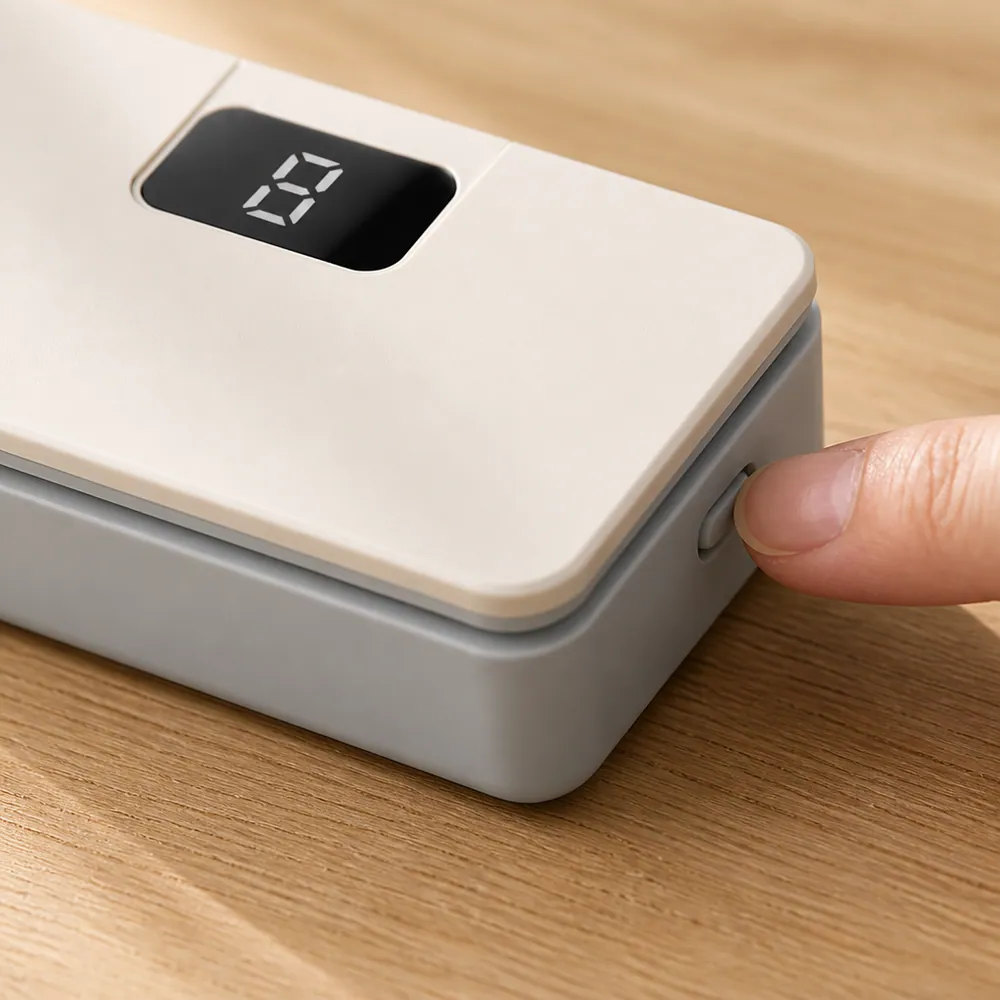
Seal the bag shut in about two seconds.
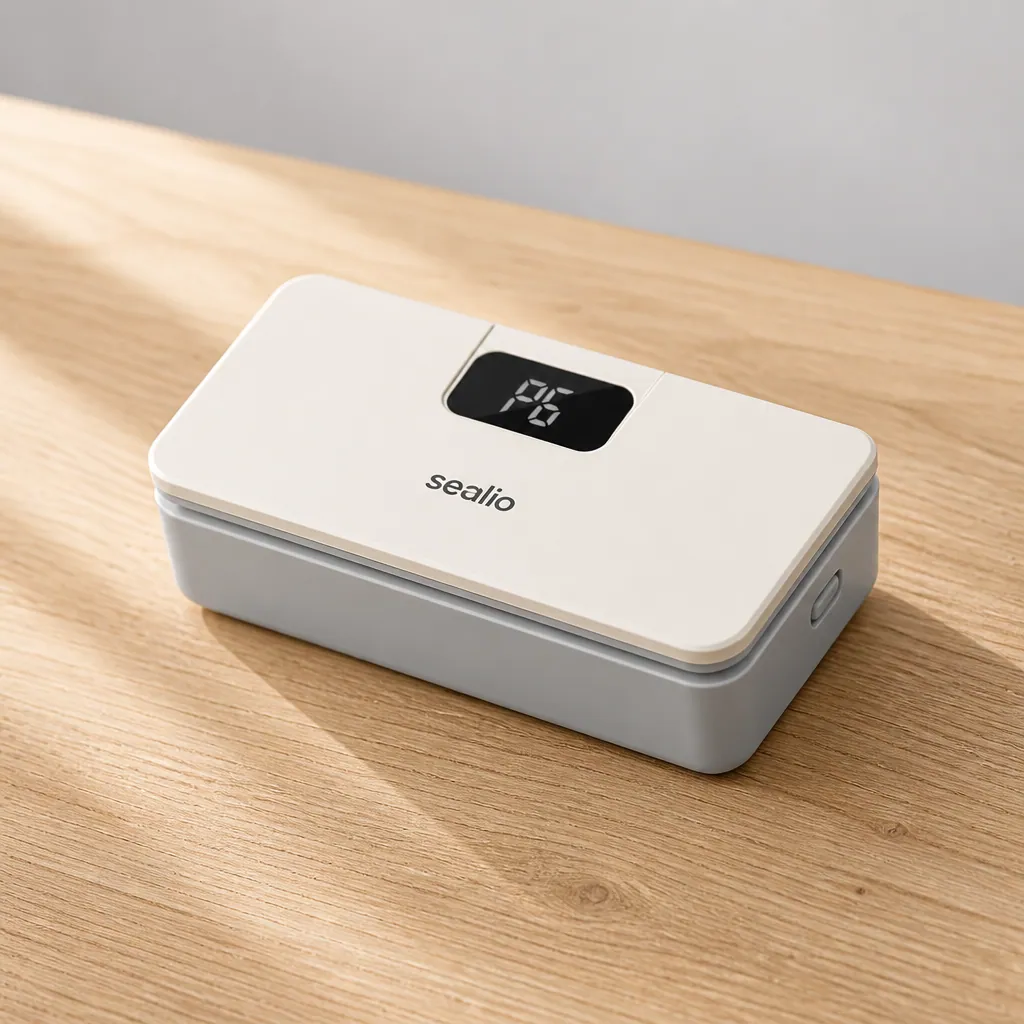
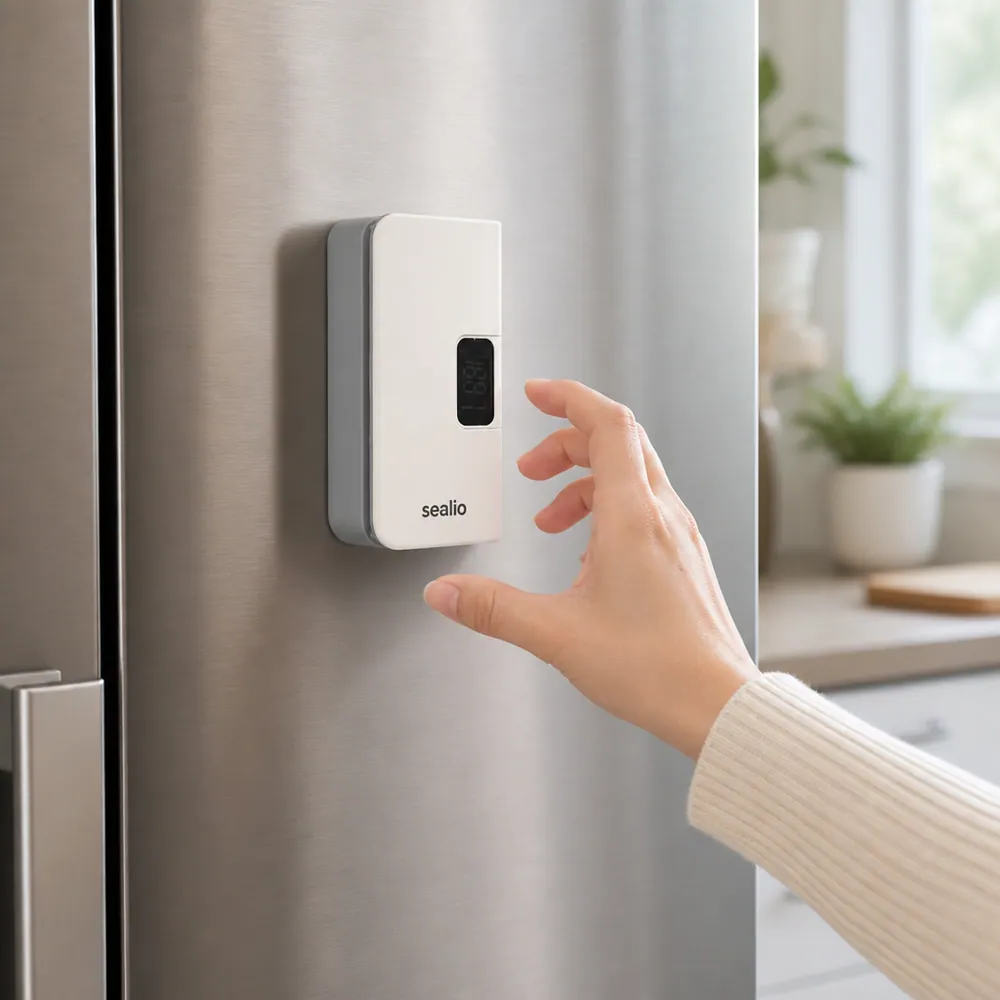
A clip folds your bag over and hopes. Sealio welds it closed in one press — six heat settings from thin crisp packets to thick freezer bags, a built-in blade to open it again, and a magnetic back so it lives on the fridge door instead of dying in a drawer.
- 6 heat settings
- Blade built in
- Magnetic back
- USB-C rechargeable
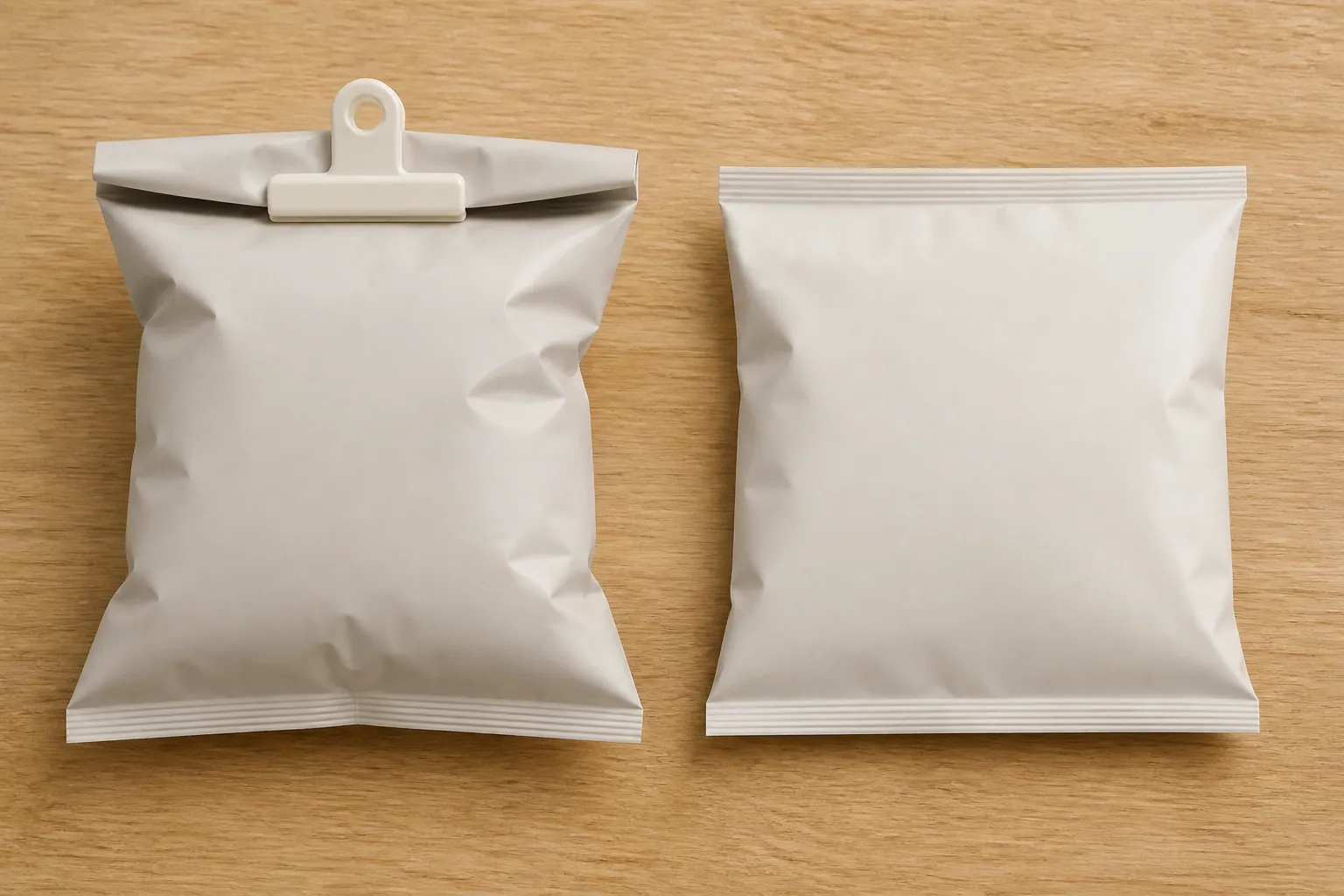
Why it goes soft anyway
A clip has never sealed a bag. It just holds the fold.
Look at what a bag clip actually does. It grips two creased layers of foil together at a couple of points along the top. The plastic is stiff, the fold never lies flat, and at both ends of the clip there is a small open channel running straight down into the bag.
That channel is the whole problem. Crisps and crackers don’t go soft because of some slow mystery — they go soft because air keeps reaching them, and moisture rides in with it. A fold slows that down. It doesn’t stop it.
So the bag sits in the cupboard for four days quietly deteriorating, and on Thursday somebody opens it, pulls a face, and the rest goes in the bin. You bought it, you carried it home, you paid to throw most of it away.
Heat is what closes a plastic bag properly. Melt the two inner faces together and the seam becomes one continuous piece of film, with no channel left to travel down. That’s what a factory does before it ships the bag, and it’s the only thing that genuinely closes it again afterwards.
How it works
Three steps, and one of them is optional
-
Pick the heat setting
Low for a thin crisp packet, high for a thick freezer bag. The number shows on the display, and once you’ve found the setting for the bags you buy most, you never touch it again.
-
Lay the bag in and press down
Flatten the top edge, close Sealio over it, hold. It heats, welds, and releases — roughly two seconds on a crisp packet. Up to 95mm of bag width per press, so wider bags take two.
-
Next time, cut it open with the same tool
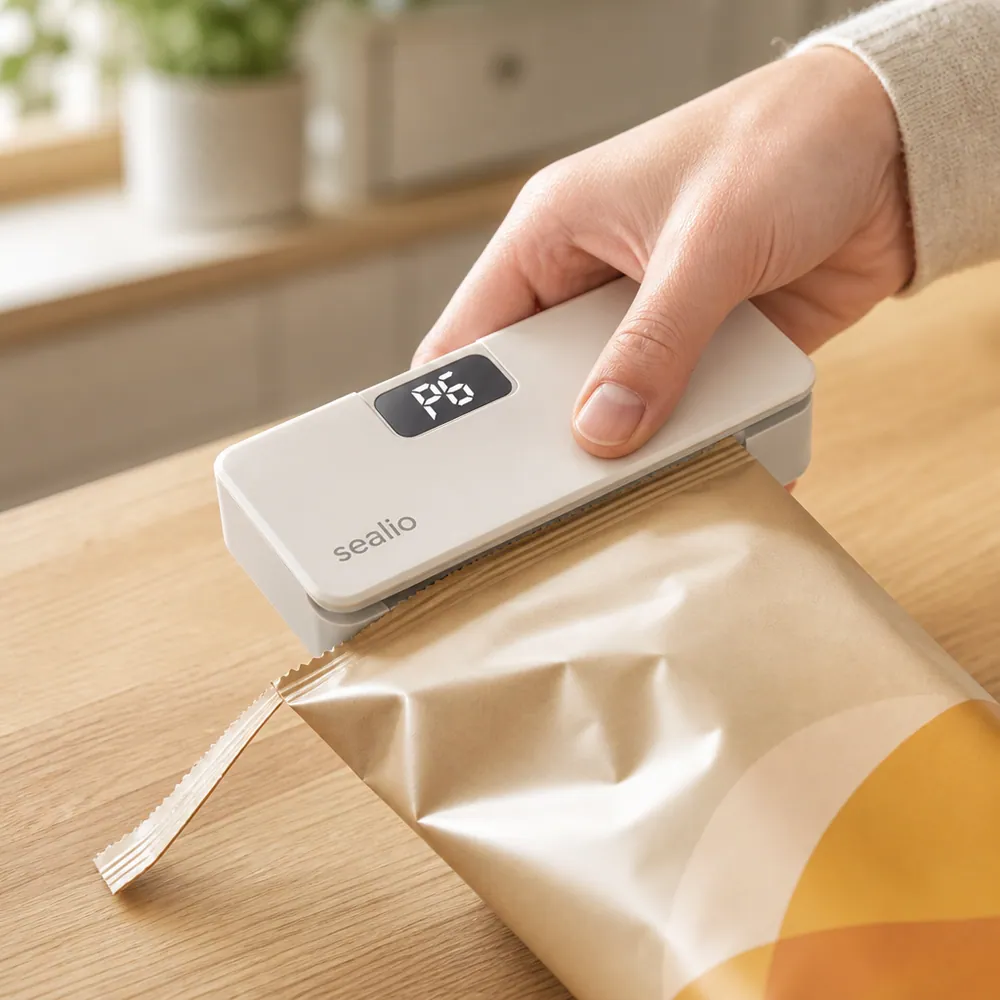
Swipe the built-in blade along the top and it takes a clean strip off. Take what you want, seal the new edge, put it back. A tall bag has several rounds of that in it.
The magnet is the reason it works
This sounds like the least important feature on the page. It’s the most important one, and it’s the difference between a gadget you use and a gadget you own.
A bag sealer that lives in the third drawer down does nothing. You’re standing at the counter with an open bag in one hand, and the cost of walking over, opening a drawer and rummaging past the whisks is just high enough that you reach for a clip instead. Every time.
Stuck to the fridge at eye level, it’s already in your hand before you’ve thought about it. That’s the entire behavioural trick, and without it none of the rest matters.
Six heat settings, because bags aren’t all the same thickness
This is where single-temperature sealers fail, and it fails in both directions. Not enough heat on a thick freezer bag and the weld peels apart the moment you lift it. Too much heat on a thin crisp packet and you don’t get a seam, you get a hole with melted edges.
Six settings, shown on the display so you know where you are, covers the range from a single-layer snack bag up to heavy freezer film. Start one notch lower than you think and work up — you can always add heat, and the first inch of a bag is the cheapest place to test.
The blade is what makes it repeatable
A sealer on its own is a one-way trip: you close the bag beautifully and then attack it with scissors, or with your teeth, and now the top is a ragged mess that won’t seal flat again.
There’s a small blade set into the body. Swipe it along the top and it removes a narrow strip in a straight line, leaving a clean flat edge that’s ready to be sealed again. Seal, cut, seal, cut — you lose a few millimetres of bag each round, which is why a tall cereal or coffee bag will go through the cycle plenty of times.
You already own the best container in your kitchen
The bag. It was built for the job by the company that made the food, it’s barrier film rather than clear plastic, it takes up no shelf space when it’s half empty, and it has the name and the use-by date printed on the front.
The alternative is decanting into tubs: finding a tub, finding the matching lid, washing both later, and losing track of what’s in the unlabelled one at the back. Sealing the original bag skips all of it.
One thing worth being straight about — Sealio is a heat sealer, not a vacuum sealer. It welds the bag shut. It does not suck the air out first. If what you want is vacuum-packing meat for the freezer, this is the wrong product and we’d rather you knew that now than after it arrives.
Where it works
Anything that came in a plastic bag
If the packet is heat-sealable film — which nearly all food packaging is — it will close it again.
Cupboard
- Crisps & snacks
- Cereal liners
- Crackers & biscuits
- Coffee & tea
- Flour, sugar, rice
- Pasta & grains
Fridge & freezer
- Frozen veg & fries
- Frozen fruit
- Grated cheese
- Salad & herb bags
- Bread & bagels
- Ice & freezer bags
Beyond the kitchen
- Seeds & bulbs
- Screws & spare parts
- Travel toiletries
- First-aid supplies
- Pet food & treats
- Camping & kit bags
What it won’t do
Heat sealing works by melting plastic film to itself. Anything that isn’t heat-sealable plastic film won’t weld, and it’s better to know which is which before you’re standing there wondering why it didn’t take.
- It is not a vacuum sealer. It welds the bag shut. It does not draw the air out first.
- Paper bags. Flour sacks, bakery bags, paper-only packaging. Paper doesn’t melt, so there’s nothing to weld.
- Woven sacks. Rice and pet-food sacks made of woven polypropylene mesh won’t give a continuous seam.
- Anything wet or greasy at the seal line. Wipe the top edge dry first or the weld won’t bond.
- Liquids. Sealing a bag of soup upright is a decision you get to regret once. Don’t.
- Bags wider than 95mm in one press. Wider is fine, it just takes two or three overlapping presses.
- Very thick or rigid packaging. Stand-up pouches with heavy gussets may be too bulky at the fold to weld cleanly.
- Anywhere children can reach it. There’s a heating element and a blade in here. It’s a tool, not a toy.
The details
What you’re actually getting
- TypeImpulse heat sealer — not a vacuum sealer
- Heat settings6, shown on the display
- Max seal width95mm (about 3.7in) per press
- Bag openingBlade built into the body
- MountingMagnetic back
- ControlsSingle button and digital display
- PowerCordless, USB-C rechargeable
- BodyMoulded plastic, matte cream
Test it on one bag of crisps
Seal half a bag, leave it a week, then open it next to a bag you closed with a clip on the same day. That’s the whole trial and it costs you one packet of crisps.
If the sealed one isn’t noticeably better, send it back within 30 days for a full refund of the purchase price. You don’t need to explain yourself and you don’t need the original box.
Arrives around soon · 30-day money-back guaranteeQuestions
Before you buy
No, and we want that answered before anything else. Sealio is a heat sealer: it melts the two inner faces of the bag together into one continuous seam. It does not extract the air first.
You’ll see gadgets like this listed as “mini vacuum sealers” all over the internet. That description is wrong. If you need genuine vacuum-packing — raw meat for long freezer storage, sous vide — buy a chamber or suction vacuum sealer instead, not this.
If the bag is plastic or foil-laminate film, yes — that covers crisps, cereal liners, frozen veg, coffee, pasta, bread, grated cheese, salad and standard zip bags.
It won’t seal paper, and it won’t seal woven polypropylene sacks like big rice or pet-food bags, because neither melts into a continuous seam. If you’re unsure, test on the empty top strip of the bag before you commit.
95mm, about 3.7 inches, in a single press. Most snack, cereal and frozen bags fit in one or two.
Wider bags aren’t a problem, they just take overlapping presses. Overlap them by a good few millimetres rather than butting them up end to end — a gap between two seals is the one mistake people make, and it defeats the point.
With the blade built into the body. Swipe it along the top and it takes a narrow strip off in a straight line, which leaves a clean flat edge ready to seal again.
You lose a few millimetres of bag height each cycle, so a tall cereal or coffee bag has plenty of rounds in it and a short snack packet has fewer.
We’re not going to print a number we haven’t measured. The factory quotes a range so wide it isn’t a measurement, and every competing page you’ll find has simply repeated it.
What we can tell you honestly: it charges over USB-C, a single seal draws power for about two seconds, and in normal kitchen use you’ll be charging it occasionally rather than constantly. When we have a figure we’ve tested ourselves, it’ll go on this page.
There is a heating element inside it, so treat it as a hot tool. The element sits recessed behind an insulating strip so your fingers aren’t on it during normal use, and you’re holding the outer shell, not the element.
Don’t hold it closed on nothing for long stretches, don’t poke inside it straight after a run of seals, and keep it out of reach of children — there’s a blade in here as well as a heater.
Start lower than you think and work up. Thin single-layer crisp packets want the bottom of the range; thick freezer film wants the top.
Test on the empty strip above where you’re going to seal. Too little heat gives a weld that peels apart when you tug it; too much gives you a hole with melted edges. The right setting gives a flat, even seam you can’t pull open with your fingers. Once you’ve found it for the bags you buy weekly, you’ll leave it there.
The Sealio unit itself. It charges from any standard USB-C cable — the same one your phone, tablet or e-reader uses — so there’s nothing proprietary to lose or replace.
Give it a full charge before the first seal.
Last thing
There’s a bag in your cupboard going soft right now
You know the one. Folded over twice, clipped, three-quarters full, and already past its best. It’ll be in the bin by the weekend, and the next bag will follow it.